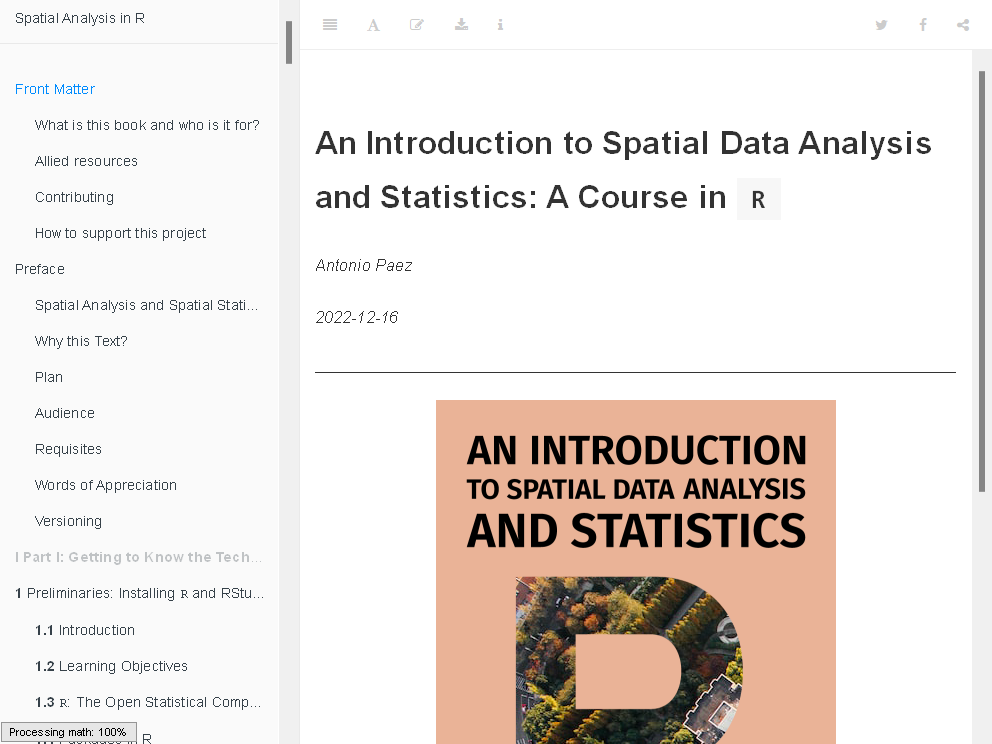
Teaching applied spatial statistics: Using open educational and reproducible resources
The webbook is accompanied by R package {isdas}:
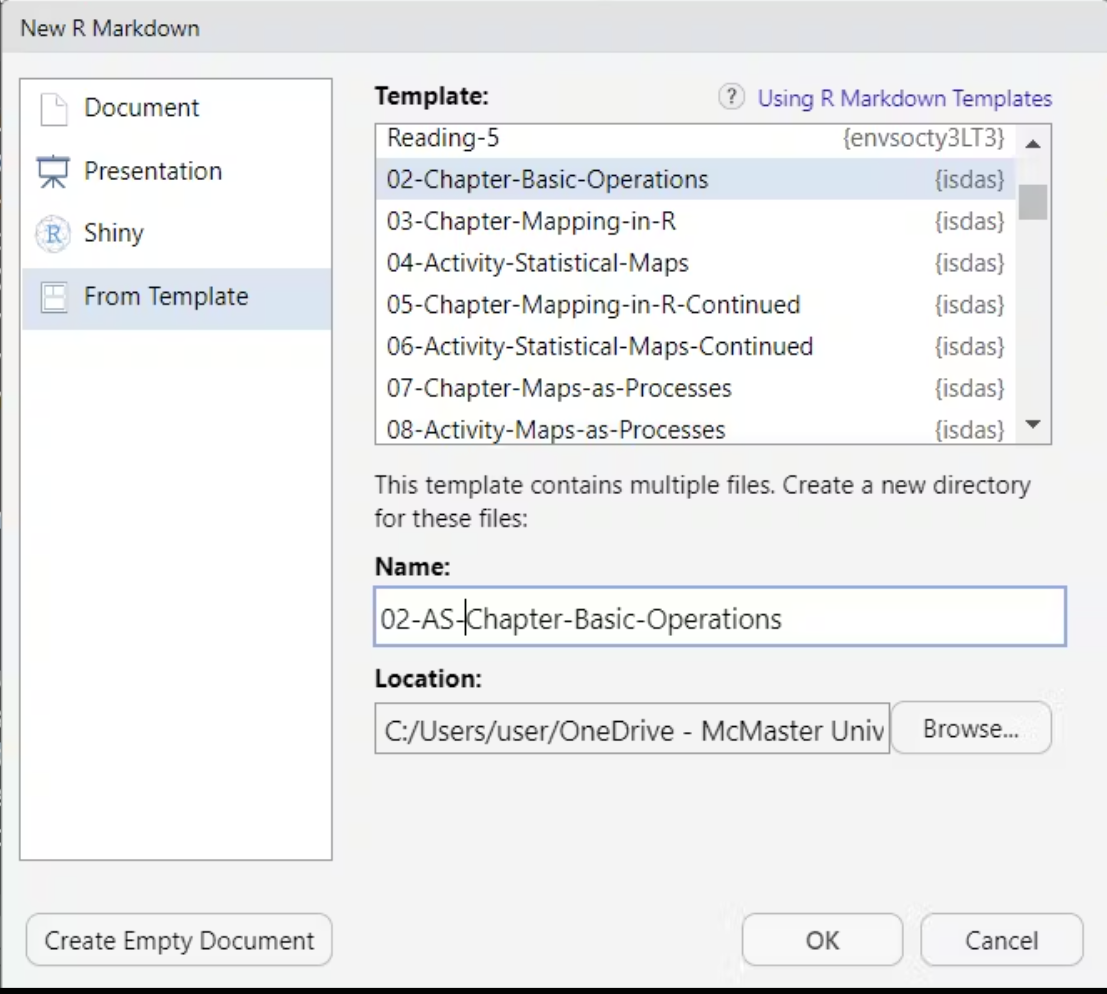
Contains .Rmd templates (Chapters and Activities):
Contains data sets:
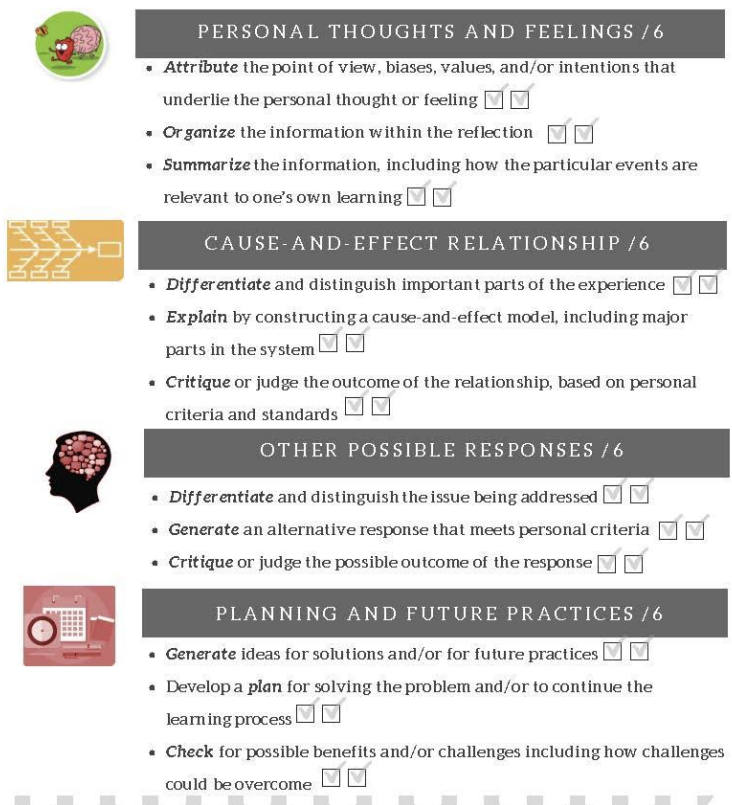
Reflection marking rubric (Whalen, 2020)
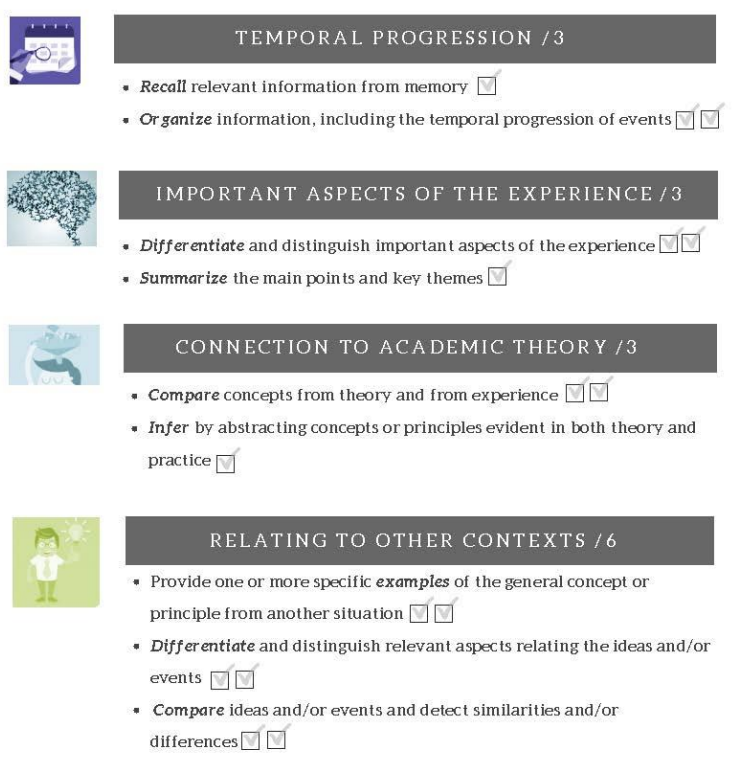
Reflection marking rubric (Whalen, 2020)
Flipped classroom (1/5)
“I enjoyed the split classroom style. It made for a demanding but not stressful experience. I also liked the lab and classroom topics, applying the concepts and then learning the details was really helpful for understanding..”
New tools for the future (2/5)
“…I’ve even done a bit of R coding in my free time using open-source data just for fun when a random topic … that I want to investigate further (i.e. covid cases and vaccinations, real estate prices…)”
Science communication (3/5)
” This reflection merely put into words a realization that I had failed to experience in earlier stats courses:… being able to analyse your data in a way that is fair, comparable, and communicable is invaluable.”
Threshold concepts: e.g., null landscapes (4/5)
“Learning about the null landscape was where my mindset started to switch…. So naturally, I started to think about how you could consider points random….[how] to explain randomness statistically. This was linked with hypothesis testing, which helped me understand set boundaries in the setting of point pattern analysis.”
Webbook (5/5)
” The textbook was very comprehensive, and the integration with R-Studio definitely enhanced my understanding of the code connected with each concept..”
“While the textbook was a superb resource, it is also quite dense, and something like a chapter summary at the end that highlights the key takeaways ….”
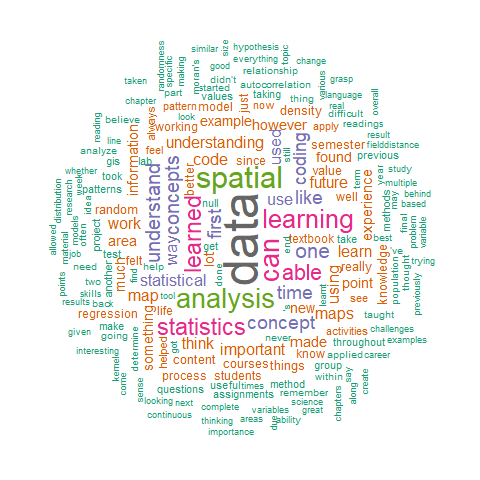
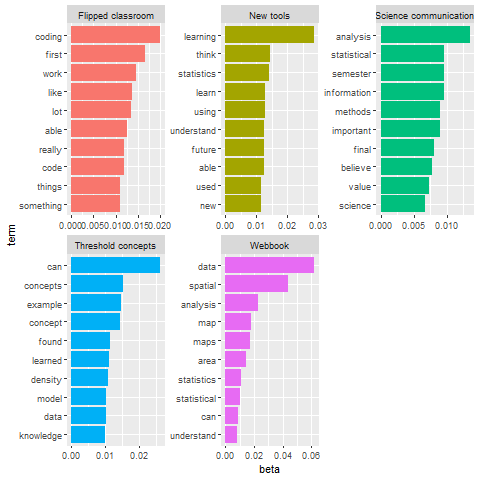
Clusters of topics within learners’ reflections
Thank you! Questions/Comments?
Anastasia Soukhov (soukhoa@mcmaster.ca)
I’d like to acknowledge funding recieved through the MacPherson Institute’s 2020/21 OER Creation Grant (PI: Antonio Paez)